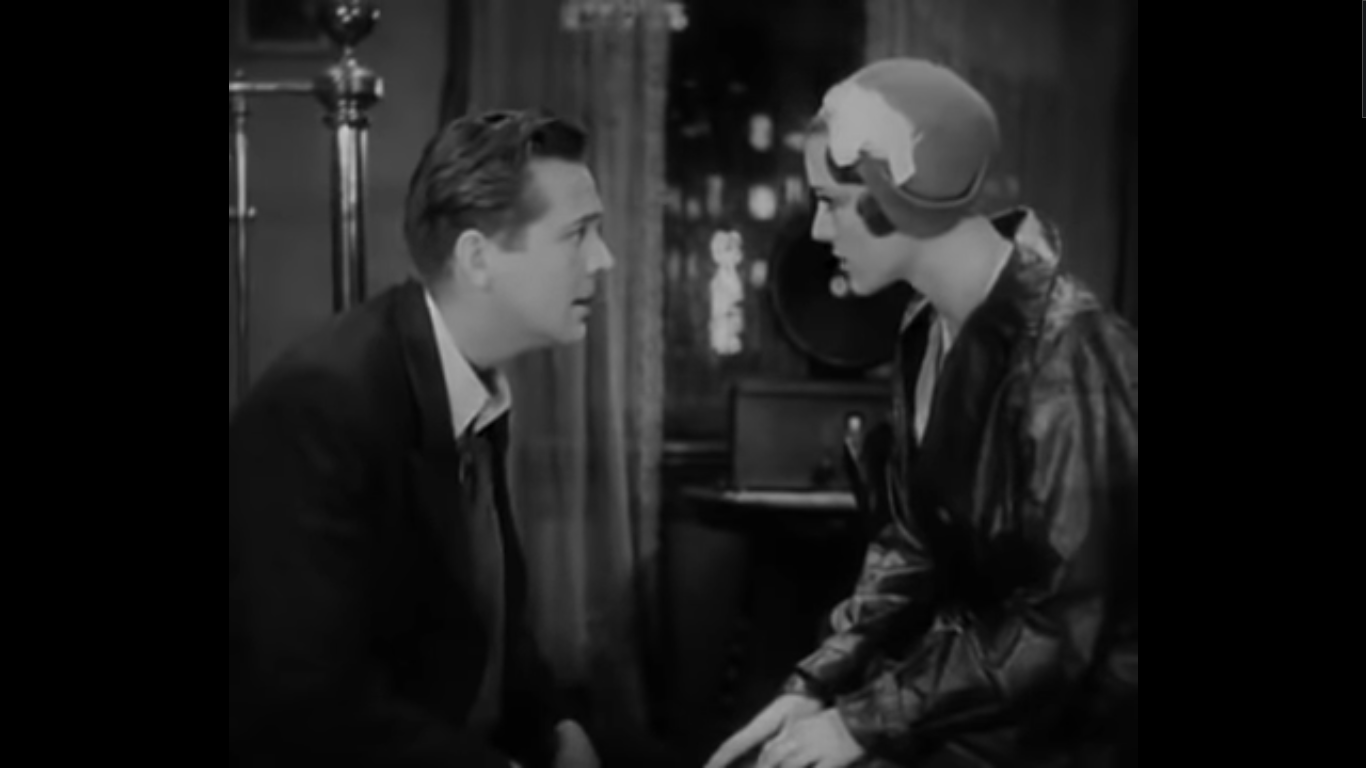
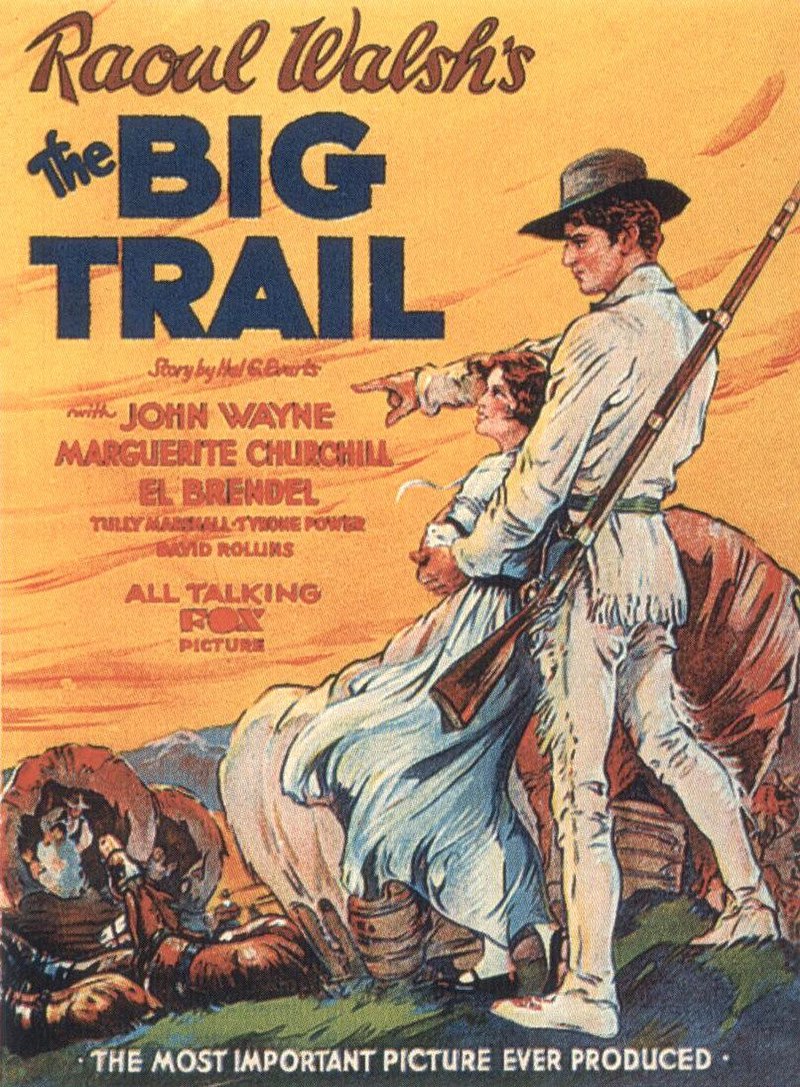
 It’s remarkable how a pristine print of an old film makes it come alive before your eyes, and I feel this way most ardently with The Big Trail, an early widescreen beauty directed by Raoul Walsh. With all the grit and grime removed, it’s almost like we can reach out and touch it in front of us.
There’s a certain amount of folklore about how the movie didn’t turn a profit, and it put John Wayne through 9 more years of purgatory before John Ford threw him a bone with another leading role in Stagecoach. And maybe now we attach it to the legacy of all the ensuing pictures that came in its wake, but there’s still something agreeable about it on its own terms.
I think of something like Red River, where the images overflow with all sorts of people—the world feels lived in and raw—where so much is possible. There’s an excitement in the prospect even as danger isn’t far off. And the environment itself hardly feels like it’s been faked; everything feels like living, breathing terrain full of character, hardly for the faint of heart. It’s also ripe with treachery.
The Big Trail exhibits the life of mountain men, mercantile stores laden with goods, log cabins, wagons, mud, and strapping heroes like John Wayne. Even if he is a bit more wiry and his voice an octave higher than most of us remember, his unmistakable DNA is right there in front of us.
Veteran Tully Marshall plays the loyal Zeke with a congenial old-timey register in the vein of Walter Huston. Tyrone Power Sr. has what purportedly was his only talkie role as the wagon train’s gruff leader. He’s also one of the most obvious human antagonists if the natural elements weren’t enough already.
Ward Bond, another western mainstay, is plainly visible too, although he speaks only a few lines near the beginning. Meanwhile, the Swedish jokes courtesy of El Brendel make me consider how our noses turn up at the portrayal of certain minorities (it seems like we can throw Swedish people in with them).
From the very first frame, The Big Trail is playing on the American mythos of the west settled by plucky pioneers as eastern civilization continues its slow march to all regions of the austere United States. We understand now that this grand story is in part a convenient myth or at least a sliver of the story, but alongside some of the works of John Ford or even something like The Virginian, we see the syntax around the western genre being solidified to great effect.
There’s also a continued codification of the typical hierarchy: Understandably, it’s a masculine world where women are mostly subordinate, and Indians are to be feared. However, even this element is made slightly more nuanced by Wayne’s character, who respects and keeps company with some Native Americans.
We watch a Pilgrim prostrate with his community, his head raised as he entreats his God for travel mercies on the road ahead. Its imagery presages movies like Our Daily Bread or, most obviously, John Ford’s Wagon Master (1950).
The story is grand and sweeping at this point; we hardly need the details, just the sense of the trail evoked in the title, and the movie gives us that. There are threats from belligerent Natives that lead to a circling of the wagons to take up a defensive stand. Then there’s a seismic thunderstorm unleashing nature’s fury on finite human beings. They feel so puny in comparison, and it evokes the magisterial scenes on the plain John Ford captured in She Wore a Yellow Ribbon a generation later.
Though the scoring doesn’t do the final moment of reunification between Wayne and his girl (Marguerite Churchill) any favors, the images are capable of doing most of the heavy lifting. Because so much is accomplished with two people being set off against the natural landscape in a way that feels full and alive.
It seems pragmatic to say John Wayne was probably unfairly vilified for making a giant picture like The Big Trail a box office flop. The massive budget and pioneering presentation aspects of the feature didn’t do it any favors when the bottom line was concerned.
Thankfully, almost a century later we can concern ourselves more with aesthetic decisions, and it has many of note. Walsh’s movie is a startling, expansive undertaking. At times it lumbers along, but sometimes in that scope and the sense of the images, there are these utterly spectacular moments of visual shorthand. It feels like we’re being treated to a singular experience with grand ambitions in depicting the march of pioneers across the prairies. The battle of man vs. nature has an elemental gravity to it that we so often take for granted now.
And Marion Morrison didn’t do too badly for himself. Wayne became arguably one of the most prolific and fiercely admired personas of all time. It’s instructive to get a firsthand look at his beginnings because, love him or hate ’em, his career gives us a view into the progression of not only the Western genre but Hollywood on the whole.
4/5 Stars